Description
Width: 1cm
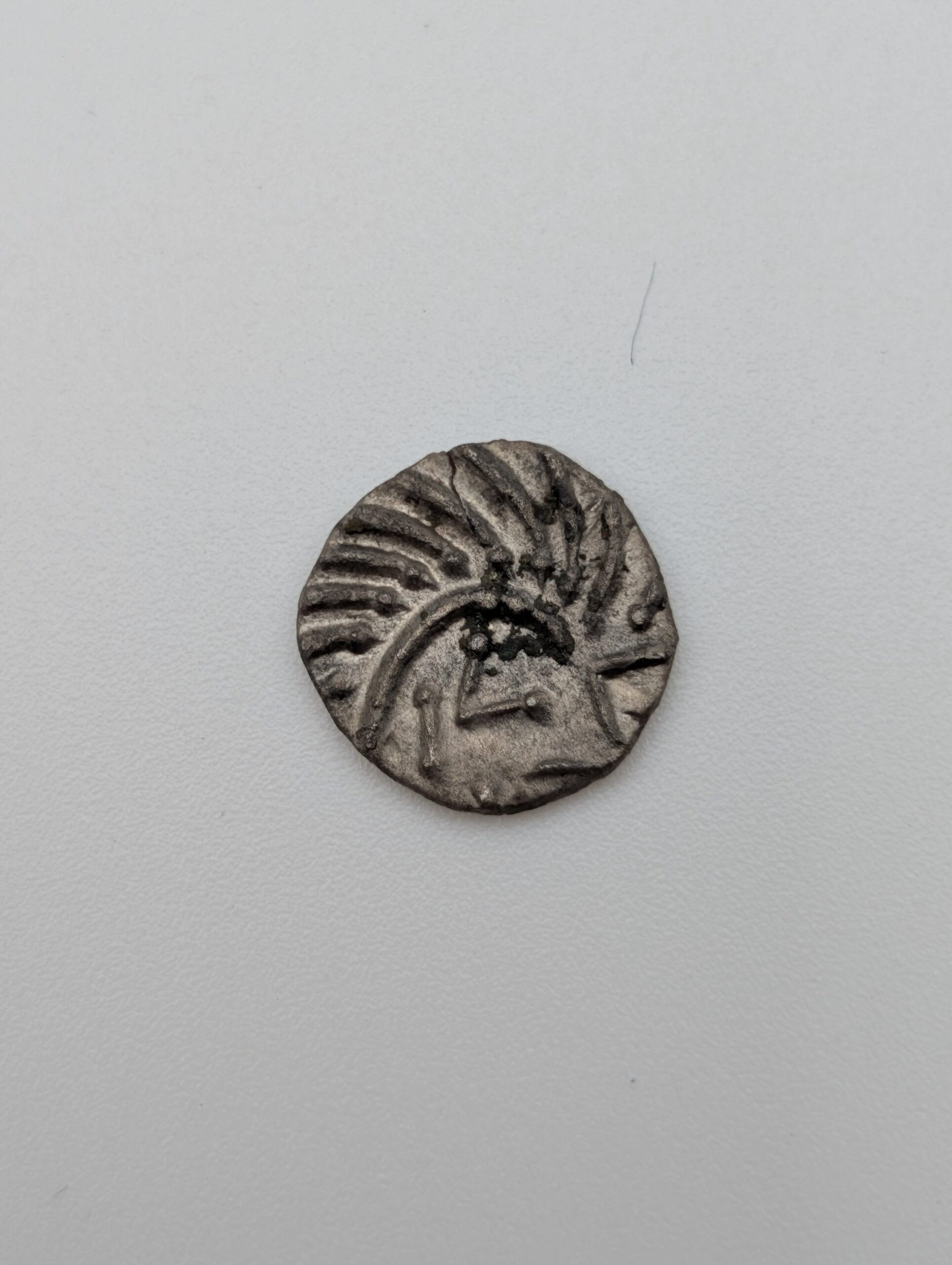
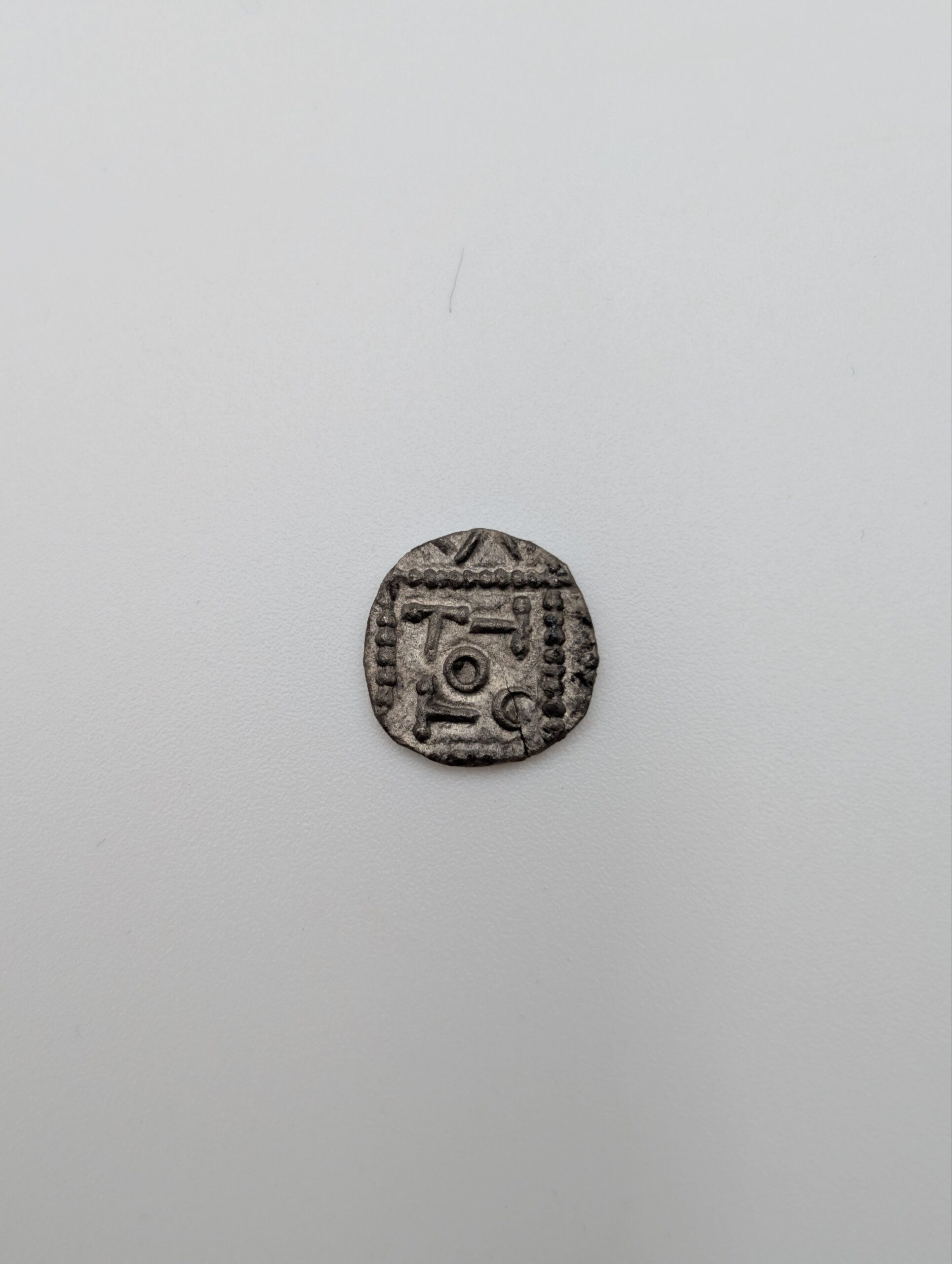
An early Anglo-Saxon silver sceat, commonly referred to as a “porcupine” type, dating from approximately AD 695–740.
These coins are among the earliest native English coinages following the Roman withdrawal, struck during a formative period of early medieval trade and economy.
The obverse typically features a stylised bust, while the reverse displays the characteristic radiating lines or abstract motifs that give rise to the “porcupine” nickname.
The design is highly schematic, reflecting the transitional artistic styles of the period and the decentralised nature of early minting.
Sceattas such as this were produced in various regions across Anglo-Saxon England and Frisia, and are highly valued for their historical significance and distinctive primitive aesthetic.
This example shows the expected irregular flan and hand-struck character, with age-related wear consistent with circulation over a millennium ago.